


How do oxygen absorber packets interact with different types of packaging seals?
As a supplier of oxygen absorber packets, I've witnessed firsthand the crucial role these small yet powerful packets play in preserving the quality and extending the shelf - life of various products. The interaction between oxygen absorber packets and different types of packaging seals is a topic of great importance, as it directly impacts the effectiveness of oxygen removal and product preservation.
Understanding Oxygen Absorber Packets
Oxygen absorber packets are designed to remove oxygen from the packaging environment. The most common type uses iron powder as the active ingredient. When iron powder comes into contact with oxygen and moisture, it undergoes oxidation, which results in the consumption of oxygen. For instance, our Iron Powder For Oxygen Absorber is carefully formulated to ensure efficient oxygen absorption. This oxidation process is a chemical reaction that can be represented by the equation: (4Fe + 3O_2+6H_2O = 4Fe(OH)_3).
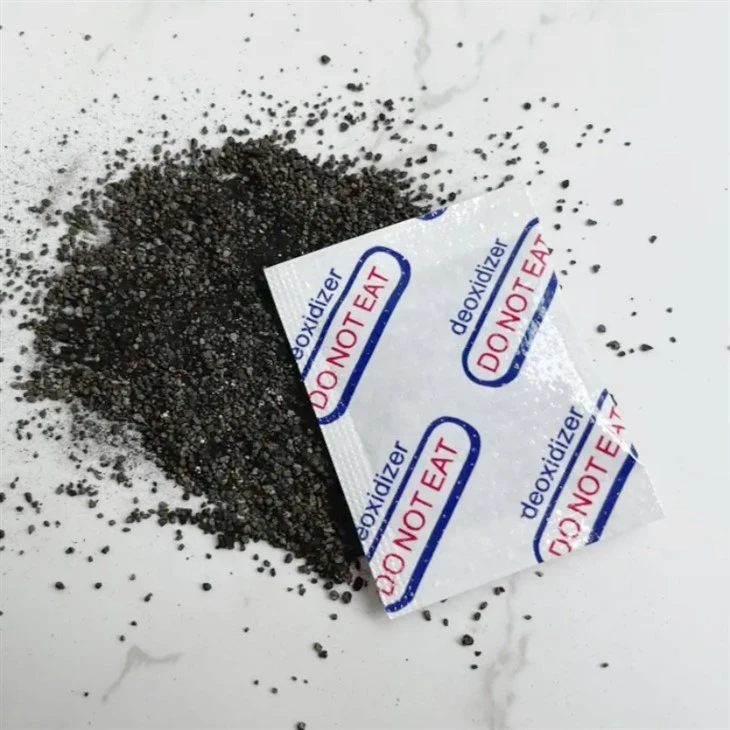

The effectiveness of an oxygen absorber packet depends on several factors, including its capacity, the initial oxygen level in the package, and the type of product being packaged. For example, our Food Grade 400cc Absorbent Oxygens Pack is suitable for a variety of food products. It can quickly reduce the oxygen level inside the package to a very low level, usually below 0.1%, which helps to prevent spoilage, mold growth, and oxidation of fats and oils in food.
Different Types of Packaging Seals and Their Impact
- Heat - Sealed Packaging
Heat - sealed packaging is one of the most common methods used in the food and pharmaceutical industries. It creates a tight seal by applying heat to the edges of the packaging material, which melts and fuses the layers together. When an oxygen absorber packet is placed inside a heat - sealed package, it starts to absorb oxygen immediately. The tight seal helps to prevent the entry of outside oxygen, allowing the absorber to work more efficiently.
However, the quality of the heat seal is crucial. A poor heat seal may have small holes or weak areas, which can allow oxygen to leak back into the package. This can significantly reduce the effectiveness of the oxygen absorber. For example, if a heat - sealed plastic bag has a microscopic tear, the oxygen absorber may not be able to maintain a low oxygen level inside the bag, and the product may still spoil.
- Zip - Lock Seals
Zip - lock seals are convenient for consumer products, such as snacks and small food items. They provide a reusable and easy - to - open seal. When an oxygen absorber packet is used with a zip - lock seal, it can still reduce the oxygen level inside the package. But zip - lock seals are not as airtight as heat - sealed packages. Every time the package is opened and closed, some oxygen can enter the package.
To mitigate this issue, it is recommended to use a larger capacity oxygen absorber or replace the absorber more frequently. Our Oxygene Absorber For Food can be a good choice for zip - lock packages, as it can quickly absorb the newly entered oxygen after each opening.
- Vacuum - Sealed Packaging
Vacuum - sealed packaging is often used for products that require long - term storage, such as meats, cheeses, and dry goods. In this method, the air is first removed from the package, and then it is sealed. When an oxygen absorber packet is added to a vacuum - sealed package, it can further reduce the remaining oxygen level.
The combination of vacuum sealing and an oxygen absorber can provide an extremely low - oxygen environment. This is because the initial oxygen level in the package is already very low due to the vacuum process, and the absorber can quickly consume the remaining oxygen. For example, in the case of vacuum - sealed coffee, the oxygen absorber can help to preserve the flavor and aroma of the coffee for a longer time by preventing oxidation.
- Foil - Sealed Packaging
Foil - sealed packaging is commonly used for products that are sensitive to light, oxygen, and moisture, such as pharmaceutical tablets and some high - end food products. Foil has excellent barrier properties against oxygen and light. When an oxygen absorber packet is placed inside a foil - sealed package, it can effectively remove the oxygen that may be trapped during the packaging process.
The foil seal helps to maintain a stable environment inside the package, protecting the product from external factors. However, like heat - sealed packaging, the integrity of the foil seal is important. A damaged foil seal can compromise the effectiveness of the oxygen absorber and expose the product to oxygen and other contaminants.
Factors Affecting the Interaction
-
Package Size and Shape
The size and shape of the package can affect how an oxygen absorber packet interacts with the packaging seal. A larger package will have more oxygen initially, requiring a higher - capacity absorber. Also, the shape of the package can influence the distribution of oxygen inside. For example, in a long and narrow package, the oxygen may not be evenly distributed, and the absorber may need more time to reach all areas of the package. -
Product Characteristics
The type of product being packaged also plays a role. Some products may release oxygen or moisture over time, which can affect the performance of the oxygen absorber. For example, fresh fruits and vegetables may continue to respire and release oxygen, while high - moisture products can increase the humidity inside the package, which may impact the oxidation rate of the iron powder in the absorber. -
Storage Conditions
The storage conditions, such as temperature and humidity, can also affect the interaction between the oxygen absorber and the packaging seal. Higher temperatures can accelerate the oxidation reaction in the absorber, but they can also increase the permeability of the packaging material to oxygen. High humidity can cause the absorber to work faster, but it may also lead to the growth of mold if the package is not properly sealed.
Importance of Compatibility
It is essential to choose the right oxygen absorber packet for the specific type of packaging seal and product. For example, if you are using a heat - sealed package for a high - value food product, you may need a high - quality, high - capacity oxygen absorber to ensure long - term preservation. On the other hand, for a short - shelf - life consumer product with a zip - lock seal, a smaller and more cost - effective absorber may be sufficient.
Conclusion
The interaction between oxygen absorber packets and different types of packaging seals is a complex but important aspect of product preservation. By understanding how different seals work and how they affect the performance of oxygen absorbers, manufacturers can make informed decisions about the packaging and preservation of their products.
If you are interested in learning more about our oxygen absorber packets or have specific packaging requirements, we are here to help. We can provide you with professional advice and high - quality products to meet your needs. Contact us to start a discussion about your procurement requirements and find the best oxygen absorber solution for your products.
References
- Kays, S. J., & Paull, R. E. (2004). Postharvest physiology of perishable plant products. CRC Press.
- Labuza, T. P. (1971). Oxygen permeability of packages and oxygen scavengers. Journal of Food Science, 36(2), 192 - 197.
- Rooney, M. L. (2005). Oxygen scavengers and other active packaging technologies. CRC Press.


