


Moisture buildup in a car can lead to a host of problems, from musty odors to the growth of mold and mildew. These issues not only make the driving experience unpleasant but can also pose health risks. To combat this, many car owners turn to dehumidification solutions. Two popular options are dehumidifier car bags and charcoal. As a supplier of [Dehumidifier Car Bag], I've had the opportunity to see the effects of both methods up close. In this blog, I'll compare these two solutions and help you decide which one is best for your car.
How Dehumidifier Car Bags Work
Dehumidifier car bags are designed specifically to absorb moisture from the air inside your car. They typically contain a desiccant material, which is a substance that has a high affinity for water molecules. When the air in the car comes into contact with the desiccant in the bag, the water vapor is drawn into the material. This process helps to reduce the humidity level inside the vehicle, creating a drier and more comfortable environment.
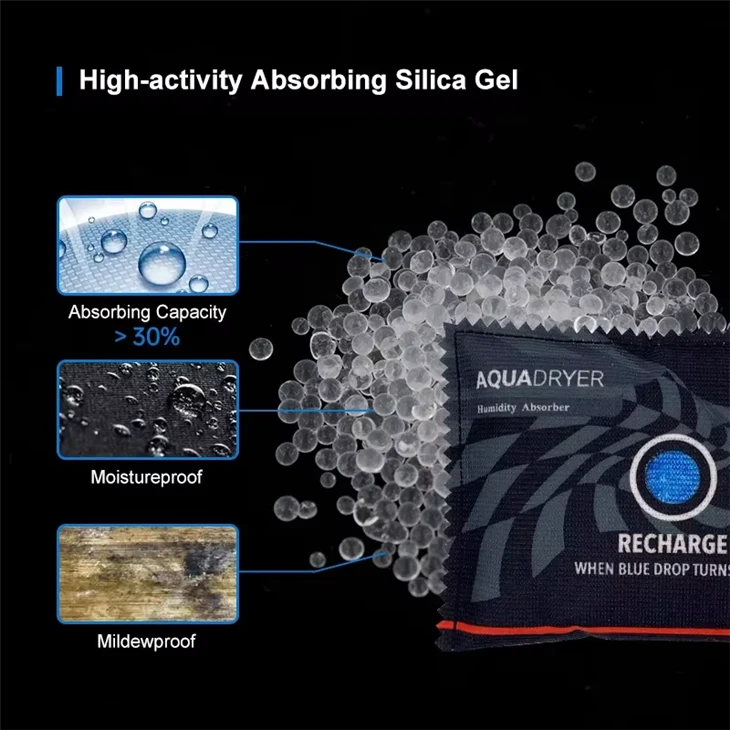
The desiccant used in these bags can vary, but common types include silica gel and calcium chloride. Silica gel is a porous material that can absorb up to 40% of its weight in water. It is non-toxic and safe to use in a car environment. Calcium chloride, on the other hand, is a highly effective desiccant that can absorb even more moisture than silica gel. It works by attracting water vapor from the air and dissolving in it, forming a liquid brine.
One of the advantages of using a dehumidifier car bag is its convenience. These bags are compact and easy to place in different areas of the car, such as under the seats, in the glove compartment, or on the dashboard. They also come in a variety of sizes and designs to suit different needs. For example, some bags are designed to be hung from the rearview mirror, while others can be placed flat on a surface.
To learn more about the effectiveness of dehumidifier car bags, you can visit our Automotive Moisture Absorber page.
How Charcoal Works as a Dehumidifier
Charcoal has been used for centuries as a natural dehumidifier and odor absorber. Activated charcoal, in particular, is highly porous and has a large surface area, which allows it to adsorb moisture and odors from the air. When the air passes through the charcoal, the water molecules and odor-causing compounds are trapped in the pores of the charcoal.
One of the benefits of using charcoal in the car is its natural and eco-friendly nature. It is made from natural materials, such as wood or coconut shells, and does not contain any harmful chemicals. This makes it a safe option for car owners who are concerned about the environment and the health of their passengers.
Charcoal also has the ability to neutralize odors. It can absorb and break down the molecules that cause unpleasant smells, such as cigarette smoke, food odors, and pet smells. This can help to keep the car smelling fresh and clean.
However, charcoal has some limitations when it comes to dehumidification. While it can absorb some moisture from the air, its capacity is relatively limited compared to dehumidifier car bags. Charcoal also needs to be replaced regularly to maintain its effectiveness. Over time, the pores of the charcoal become filled with moisture and odors, reducing its ability to adsorb new substances.
Comparison of Dehumidifier Car Bags and Charcoal
Moisture Absorption Capacity
Dehumidifier car bags generally have a higher moisture absorption capacity than charcoal. As mentioned earlier, desiccants like silica gel and calcium chloride can absorb a significant amount of water vapor from the air. This means that they can reduce the humidity level in the car more effectively, especially in areas with high humidity or in cars that are prone to moisture buildup.
Charcoal, on the other hand, can only absorb a limited amount of moisture. Its effectiveness is also affected by factors such as the type of charcoal, its surface area, and the humidity level in the environment. In general, charcoal is better suited for removing odors rather than reducing humidity.
Longevity
Dehumidifier car bags typically have a longer lifespan than charcoal. Once the desiccant in the bag is saturated with water, it can usually be reactivated by heating it in an oven or microwave. This allows the bag to be reused multiple times, making it a more cost-effective option in the long run.
Charcoal, on the other hand, needs to be replaced regularly. Depending on the humidity level and the size of the car, charcoal may need to be replaced every few weeks or months. This can add up to a significant cost over time.
Convenience
Dehumidifier car bags are more convenient to use than charcoal. They come in pre-packaged bags that are easy to place in the car and require minimal maintenance. You don't need to worry about handling loose charcoal or cleaning up any mess.
Charcoal, on the other hand, can be messy to handle. It can leave behind charcoal dust, which can be difficult to clean up. You also need to make sure that the charcoal is properly contained to prevent it from spilling in the car.

Odor Removal
Both dehumidifier car bags and charcoal can help to remove odors from the car. However, charcoal is generally more effective at neutralizing odors due to its ability to adsorb and break down odor-causing molecules. Dehumidifier car bags, on the other hand, primarily focus on reducing humidity, although some may also have odor-absorbing properties.
Cost
The cost of dehumidifier car bags and charcoal can vary depending on the brand, size, and quality. In general, dehumidifier car bags may be more expensive upfront, but they can be reused multiple times, making them more cost-effective in the long run. Charcoal, on the other hand, is relatively inexpensive, but you need to replace it regularly, which can add up to a higher cost over time.
Conclusion
In conclusion, both dehumidifier car bags and charcoal have their advantages and disadvantages. If you are primarily concerned about reducing humidity in your car, a dehumidifier car bag is the better option. It has a higher moisture absorption capacity, a longer lifespan, and is more convenient to use. However, if you are more interested in removing odors from the car and prefer a natural and eco-friendly option, charcoal may be a good choice.
As a supplier of [Dehumidifier Car Bag], I recommend our Dehumidifier Bags for Car and Car Interior Dehumidifier Bag for their high-quality desiccant materials and effective moisture absorption. Our products are designed to keep your car dry, fresh, and free from mold and mildew.
If you are interested in purchasing our dehumidifier car bags or have any questions about our products, please feel free to contact us for a procurement discussion. We are committed to providing our customers with the best products and services.
References
- "Desiccants and Humidity Control." ASHRAE Handbook - Fundamentals.
- "Activated Carbon: Properties and Applications." Environmental Science and Technology.
- "Moisture Management in Vehicles." SAE International.


