


Most consumers do not know the particular applications of silica gel and deoxidizer and what kind of product to use under what type of situation, according to findings of communication and customer chats. Though their purposes are somewhat different, both are quite important for preserving product quality. First of all, businesses-especially food makers, exporters, and organic food suppliers-must understand their variations if they are to maximize shelf life, satisfy regulatory criteria, and lower waste. The distinctions between silica gel and deoxidizer, their special uses (including the applications of deoxidizers), and how best to employ them in industrial and organic food preservation are investigated in the following paper:
1. Fundamental Differences: How Silica Gel and Oxygen Absorbers Work
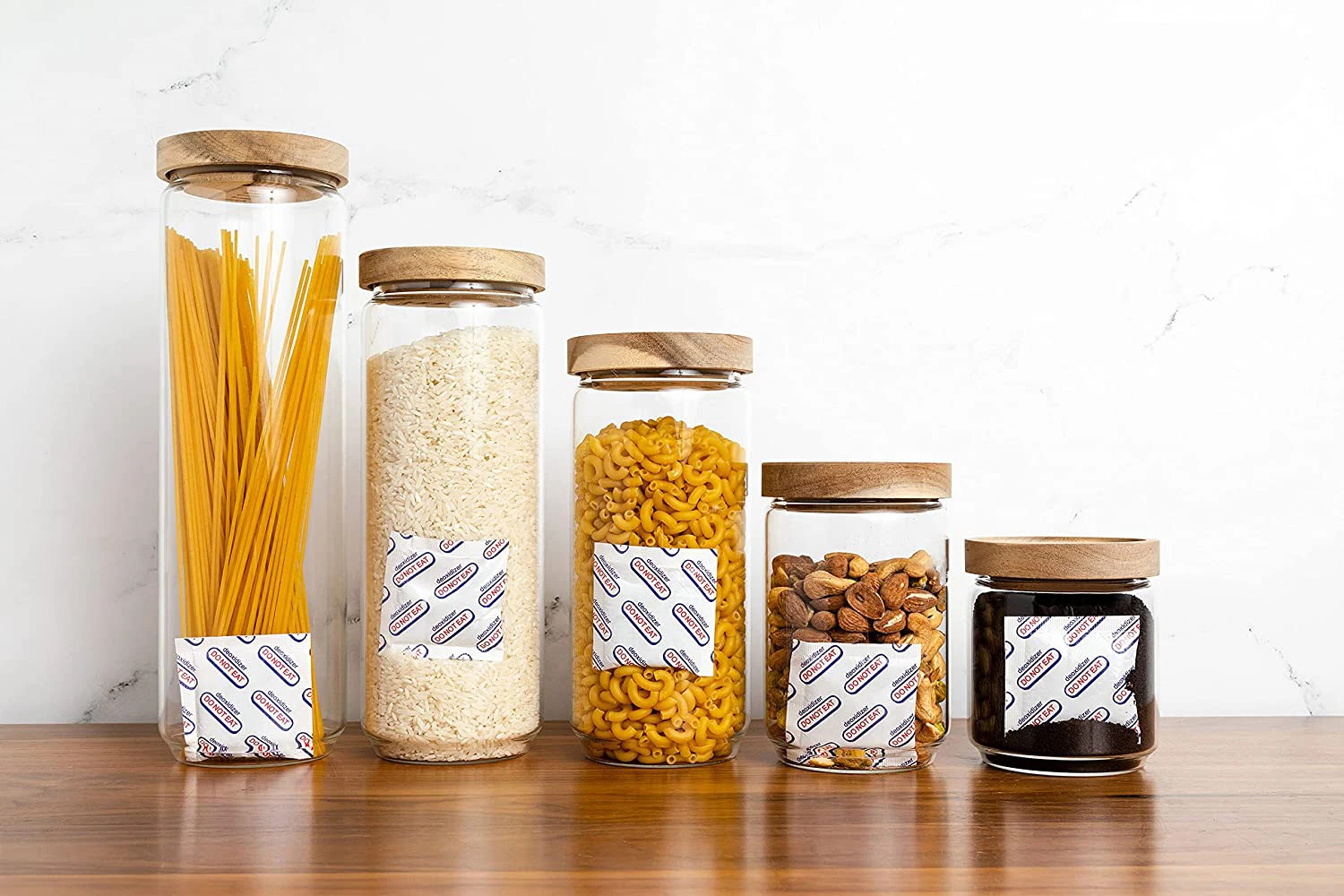
Commonly utilized hygroscopic material for package humidity control is silica gel desiccant. Its porous structure helps to trap water vapor thereby preventing mold, corrosion, or rotting of non-food goods, electronics, and drugs. It does not, however, address the main source of oxidation, rancidity, and microbiological growth in perishable goods: oxygen exposure. Deoxidizers, on the other hand-usually composed of iron powder-chemically eliminate oxygen from the sealed surroundings. The iron powder combines with oxygen to create iron oxide, therefore lowering the oxygen content to less than 0.01%. Foods include nuts, dried fruits, and meats retain their taste, color, and nutritional value only because of this procedure. Using bulk iron powder deoxidizer bags guarantees large-scale protection against spoilage for food producers; FDA-compliant deoxidizers for export packing satisfy rigorous international safety criteria.
2.Oxygen Absorbers in Organic Foods: Replacing Chemical Preservatives
Since synthetic additions are often disallowed in organic foods, one of the most groundbreaking uses of deoxidizers is in those foods. Conventional preservatives such as BHA or BHT subvert the "clean label" expectations of consumers who give health top priority. In organic foods, deoxidizers provide a natural replacement for chemical preservatives that generates an oxygen-free environment killing aerobic bacteria, fungus, and insects. For example, organic cereal growers use deoxidizers to prevent insect infestation without resorting to pesticides, and snacking can keep foods crisp and fresh without the need of synthetic additions. By combining deoxidizer size depending on residual air with their calculations, companies may exactly estimate the quantity and volume of deoxidizer needed for every package, therefore preventing either under- or over-processing.
3.Compliance and Scalability: FDA-Approved Solutions for Export and Bulk Use
Strict safety rules apply to global food exports, and Dingxing's deoxidizer packaging follows U.S. Food and Drug Administration (FDA) export packaging criteria, therefore preventing excessive transportation costs resulting from customs rejections. These deoxidizers can be straight in touch with food and have been evaluated for non-toxicity; they lack synthetic ingredients. Bulk iron powder deoxidizer bags give food manufacturers a scalable and reasonably priced alternative for big volume manufacturing lines. Designed for automated packaging systems, these pre-measured pouches help to streamline the packaging process for products including jerky, pet food or freeze-dried goods. Similarly, big containers make industrial deoxidizers used in food preservation systems appropriate for bulk components such coffee beans or spices.
4.Sizing Oxygen Absorbers: Calculating Residual Air Volume
One typical problem in storage that could result in early product degradation or resource waste is using a wrong size deoxidizer. Using the two techniques described below will enable one to select the appropriate deoxidizer size depending on residual air volume:
A. Estimate the packaging volume. Get the whole inside space of the container.
B. Specify a deoxidizer capability. Choose a deoxidizer according on the differences in sealing that may absorb 1.5 to 2 times the calculated value of oxygen.
Choose the one that fits your situation the best at last. Although their applications are somewhat distinct, silica gel and deoxidizers are both valuable instruments for protective packaging. While deoxidizers largely stop oxidation and bacterial growth, silica gel can prevent mold and dampness.


