


In the packaging industry, the preservation of product quality is a paramount concern. Composite material packaging has gained significant popularity due to its versatility, strength, and ability to provide a barrier against various environmental factors. One crucial aspect of product preservation is the control of oxygen levels within the package. Oxygen can cause oxidation, which leads to spoilage, discoloration, loss of flavor, and reduced shelf life of many products. This is where oxygen scavengers come into play. As an oxygen scavenger supplier, I am often asked whether oxygen scavengers can be used in composite material packaging. In this blog post, I will explore this question in detail and provide insights into the feasibility and benefits of using oxygen scavengers in such packaging.
Understanding Composite Material Packaging
Composite material packaging is made by combining two or more different materials to create a single structure with enhanced properties. These materials can include plastics, metals, paper, and polymers, which are laminated or co - extruded to form a multi - layer packaging. The main advantage of composite material packaging is its ability to offer a combination of barrier properties, such as protection against moisture, oxygen, light, and physical damage. For example, a common composite packaging might consist of a layer of polyethylene for flexibility and sealability, a layer of aluminum foil for excellent oxygen and light barrier, and a layer of paper for printability and stiffness.
The Role of Oxygen Scavengers
Oxygen scavengers are substances that remove oxygen from the surrounding environment. They work by chemically reacting with oxygen, effectively reducing the oxygen concentration inside the package. This helps to prevent the oxidation of products, extend their shelf life, and maintain their quality. Oxygen scavengers are commonly used in food packaging, pharmaceutical packaging, and electronics packaging.
There are different types of oxygen scavengers available in the market. Some are based on iron powder, which reacts with oxygen in the presence of moisture to form iron oxide. Others use organic compounds or enzymes that consume oxygen through chemical reactions. The choice of oxygen scavenger depends on factors such as the type of product being packaged, the packaging environment, and the desired oxygen removal rate.
Feasibility of Using Oxygen Scavengers in Composite Material Packaging
The use of oxygen scavengers in composite material packaging is indeed feasible and has several advantages. Firstly, composite material packaging provides an ideal environment for oxygen scavengers to work effectively. The multi - layer structure of composite packaging can help to contain the oxygen scavenger and prevent it from coming into direct contact with the product. This is important because in some cases, direct contact between the oxygen scavenger and the product may cause contamination or affect the product's quality.
Secondly, the barrier properties of composite packaging can enhance the performance of oxygen scavengers. Since the packaging itself provides a certain level of oxygen barrier, the oxygen scavenger only needs to remove the residual oxygen that may have entered the package during the packaging process or through minor leaks. This means that the oxygen scavenger can work more efficiently and achieve a lower oxygen concentration inside the package.
However, there are also some considerations when using oxygen scavengers in composite material packaging. One important factor is the compatibility between the oxygen scavenger and the packaging materials. Some oxygen scavengers may react with certain polymers or adhesives used in the composite packaging, which can lead to changes in the packaging's physical or chemical properties. For example, an oxygen scavenger that releases heat during the oxygen - consuming reaction may cause the melting or deformation of the packaging material. Therefore, it is essential to test the compatibility of the oxygen scavenger with the specific composite packaging materials before large - scale use.
Another consideration is the oxygen transmission rate (OTR) of the composite packaging. If the OTR of the packaging is too high, the oxygen scavenger may not be able to keep up with the rate of oxygen ingress, and the oxygen level inside the package may not be effectively reduced. On the other hand, if the OTR is too low, the oxygen scavenger may consume all the available oxygen too quickly, which may lead to the formation of a vacuum inside the package and cause the package to collapse.
Benefits of Using Oxygen Scavengers in Composite Material Packaging
Extended Shelf Life
One of the most significant benefits of using oxygen scavengers in composite material packaging is the extension of product shelf life. By reducing the oxygen level inside the package, the oxygen scavenger can slow down the oxidation process, which is a major cause of product spoilage. This is particularly important for products that are sensitive to oxygen, such as food products containing fats and oils, pharmaceuticals, and electronic components.
Improved Product Quality
Oxygen scavengers can also help to maintain the quality of the product. For example, in food packaging, the use of oxygen scavengers can prevent the development of off - flavors, discoloration, and the growth of aerobic microorganisms. In pharmaceutical packaging, it can protect the active ingredients from oxidation and degradation, ensuring the efficacy of the medication.
Reduced Packaging Waste
Since oxygen scavengers can extend the shelf life of products, it may be possible to reduce the amount of packaging material used. For example, instead of using a large and thick package with a high - barrier material to achieve a long shelf life, a thinner and more lightweight composite package with an oxygen scavenger can be used. This not only reduces the cost of packaging but also has a positive impact on the environment by reducing packaging waste.
Examples of Oxygen Scavengers for Composite Material Packaging
There are many types of oxygen scavengers suitable for composite material packaging. For food packaging, you can consider our Oxygene Absorber Food Packet, which is designed to effectively remove oxygen from food packages. It is safe for use with food products and has a high oxygen absorption capacity.
If you have larger packages or products that require a higher oxygen - scavenging rate, our Oxygen Absorber 3000cc is a great choice. It can remove a large amount of oxygen in a relatively short time, making it suitable for industrial - scale packaging.
For small - sized food packages, our Oxygen Absorb Bag 100cc Food is an ideal option. It is compact and can be easily placed inside the package without taking up too much space.
Conclusion
In conclusion, oxygen scavengers can be effectively used in composite material packaging. The combination of the barrier properties of composite packaging and the oxygen - removing ability of oxygen scavengers can provide a powerful solution for product preservation. However, it is important to carefully consider the compatibility between the oxygen scavenger and the packaging materials, as well as the oxygen transmission rate of the packaging. By doing so, you can ensure the optimal performance of the oxygen scavenger and achieve the best results in terms of product shelf life and quality.

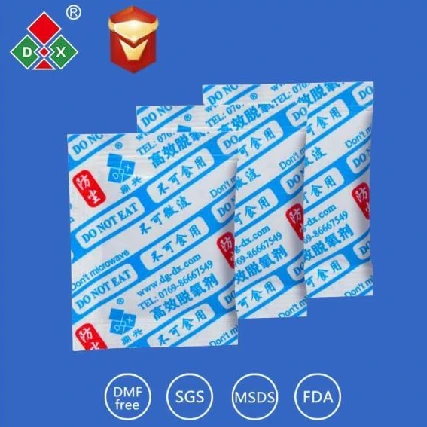
If you are interested in using oxygen scavengers in your composite material packaging, we are here to help. Our team of experts can provide you with detailed information about our oxygen scavenger products, conduct compatibility tests, and offer customized solutions based on your specific needs. Contact us today to start a procurement discussion and find the best oxygen scavenger solution for your packaging requirements.
References
- Rooney, M. L. (2005). Oxygen Scavengers in Food Packaging. CRC Press.
- Yam, K. L., & Lee, S. Y. (2011). Oxygen Scavengers and Barrier Packaging: Technology and Applications. Wiley - Blackwell.
- Han, J. H. (Ed.). (2014). Innovations in Food Packaging. Academic Press.


