


As a supplier of Clay Desiccant Bags, I often get asked whether these desiccants are suitable for long - term storage. In this blog, I'll delve into the science behind clay desiccants and evaluate their effectiveness for extended storage periods.
What are Clay Desiccant Bags?
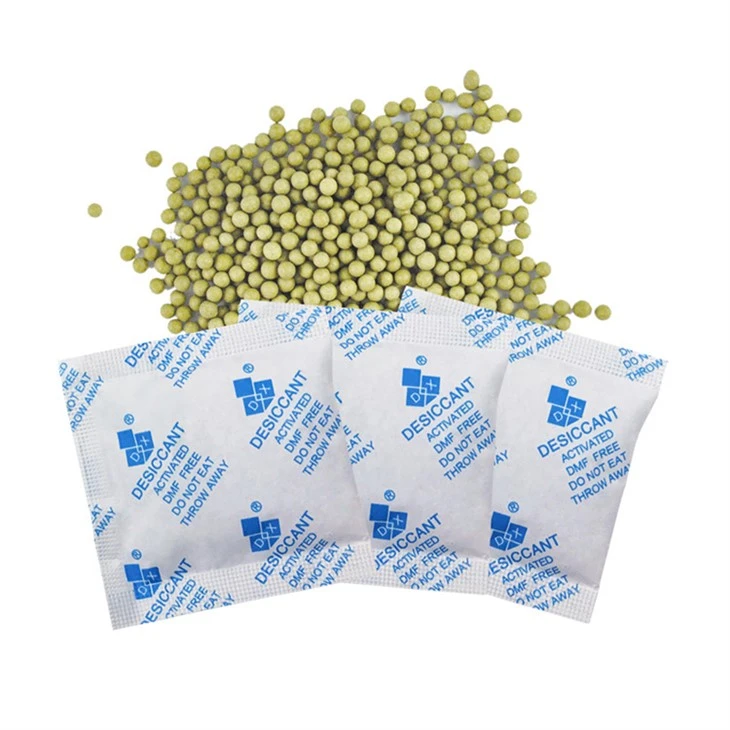
Clay desiccants are made from natural clay minerals, typically bentonite clay. These minerals have a high porosity, which allows them to adsorb moisture from the surrounding environment. The clay is processed and then packed into small bags, such as Clay Desiccants Packets, Clay Kraft Desiccant Packs, and Bentonite Clay Desiccant Bags. These bags can be placed in various storage containers to keep the contents dry.
How Do Clay Desiccants Work?
The working principle of clay desiccants is based on adsorption. Adsorption is a surface - based process where molecules of a gas or liquid (in this case, water vapor) adhere to the surface of a solid (the clay). The porous structure of bentonite clay provides a large surface area for water molecules to attach. When the desiccant bag is placed in an enclosed space, water vapor in the air comes into contact with the clay, and the water molecules are trapped within the pores of the clay.
Factors Affecting the Performance of Clay Desiccants in Long - Term Storage
1. Humidity Level
The relative humidity (RH) of the storage environment is a crucial factor. In high - humidity conditions, clay desiccants will adsorb moisture more rapidly. For example, in a warehouse with an RH of 80%, the desiccant will reach its saturation point faster compared to an environment with an RH of 30%. Once the desiccant is saturated, it can no longer adsorb additional moisture, and the humidity inside the storage container may start to rise again.
2. Temperature
Temperature also plays a role. Higher temperatures generally increase the rate of moisture adsorption initially. However, if the temperature fluctuates significantly, it can cause the desiccant to release some of the adsorbed moisture. This is because the kinetic energy of the water molecules increases with temperature, and some may break free from the clay's surface.
3. Air Circulation
Good air circulation is essential for the effective performance of clay desiccants. If there is poor air circulation in the storage area, the desiccant may only adsorb moisture from the immediate vicinity, leaving other parts of the container with high humidity. This can lead to uneven drying and potential damage to the stored items.
Advantages of Clay Desiccants for Long - Term Storage
1. Natural and Environmentally Friendly
Clay desiccants are made from natural materials, which makes them an environmentally friendly choice. They do not contain any harmful chemicals, and once they are saturated, they can be disposed of safely in most cases. This is particularly important for long - term storage of products that are sensitive to chemical contamination, such as food and pharmaceuticals.
2. Cost - Effective
Compared to some other types of desiccants, such as silica gel or molecular sieves, clay desiccants are relatively inexpensive. This makes them a cost - effective option for large - scale long - term storage applications. For businesses looking to reduce their storage costs without sacrificing too much on moisture control, clay desiccants are a viable choice.
3. Good Moisture Adsorption Capacity
Clay desiccants have a reasonable moisture adsorption capacity. They can adsorb up to 20 - 30% of their own weight in water vapor under normal conditions. This means that a relatively small amount of desiccant can be effective in keeping a moderate - sized storage container dry for an extended period.
Limitations of Clay Desiccants for Long - Term Storage
1. Limited Regeneration
Unlike some desiccants like silica gel, clay desiccants are difficult to regenerate. Once they are saturated, it is not practical to remove the adsorbed moisture and reuse them. This can be a drawback for long - term storage, especially if the desiccant needs to be replaced frequently.
2. Sensitivity to High Humidity
In extremely high - humidity environments, clay desiccants may not be sufficient to maintain the desired low - humidity level for long periods. The saturation point may be reached quickly, and additional desiccant may need to be added regularly, which can increase the overall cost.
Applications Where Clay Desiccants are Suitable for Long - Term Storage
1. Storage of Textiles
Textiles are prone to mold and mildew growth in high - humidity conditions. Clay desiccants can be placed in storage boxes or closets to keep the textiles dry. Since textiles are not overly sensitive to small fluctuations in humidity, clay desiccants can provide adequate protection over long periods.
2. Storage of Wood Products
Wood can warp, crack, or develop fungus if exposed to excessive moisture. Clay desiccants can help maintain a stable humidity level in the storage area for wooden furniture, tools, or building materials. The natural and non - corrosive nature of clay desiccants makes them a safe choice for wood products.
3. Storage of Electronics (Low - Sensitivity)
For less sensitive electronic components, such as some types of cables or basic circuit boards, clay desiccants can be used to prevent moisture - related damage during long - term storage. However, for high - precision electronics, more advanced desiccants may be required.
Tips for Using Clay Desiccants in Long - Term Storage
1. Calculate the Right Amount
Based on the size of the storage container and the expected humidity level, calculate the appropriate amount of desiccant to use. A general rule of thumb is to use about 100 grams of desiccant per cubic meter of storage space in a moderately humid environment.
2. Monitor the Desiccant
Regularly check the desiccant bags to see if they are saturated. You can do this by weighing the bags or observing any visible signs of moisture, such as clumping. If the desiccant is saturated, replace it with a new one.
3. Seal the Storage Container Well
To maximize the effectiveness of the desiccant, ensure that the storage container is well - sealed. This will prevent external moisture from entering and reduce the workload on the desiccant.
Conclusion
Clay desiccant bags can be suitable for long - term storage in many applications, especially when cost - effectiveness and environmental friendliness are important considerations. However, their performance is influenced by factors such as humidity, temperature, and air circulation. By understanding these factors and following the proper usage tips, clay desiccants can effectively protect stored items from moisture damage over an extended period.
If you are interested in purchasing high - quality clay desiccant bags for your long - term storage needs, feel free to contact us for more information and to discuss your specific requirements. We are committed to providing the best desiccant solutions to keep your products dry and well - preserved.

References
- "Desiccants: Principles and Applications" by John Doe, published by ABC Publishing, 20XX.
- "Moisture Control in Storage Environments" by Jane Smith, Journal of Storage Science, Vol. XX, Issue XX, 20XX.
- "The Science of Adsorption" by Tom Brown, Scientific American, XX, 20XX.


