


Clay desiccant packs are widely used in various industries to absorb moisture and prevent the damage of products caused by humidity. As a supplier of clay desiccant packs, I often receive inquiries about the shape of these desiccants. In this blog, I will explore the different shapes of clay desiccant packs, their advantages, and how they are tailored to specific applications.
Common Shapes of Clay Desiccant Packs
1. Rectangular or Square Packs
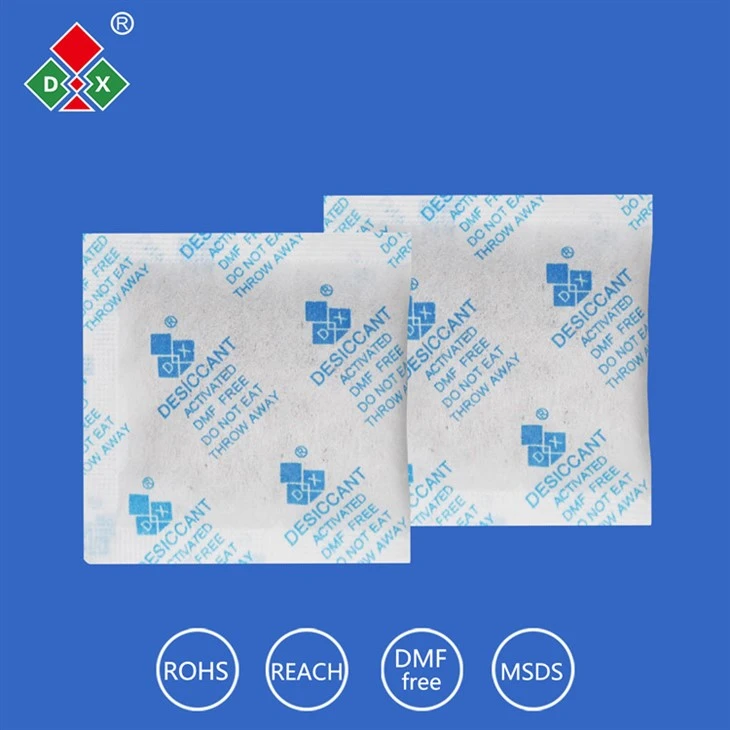
Rectangular or square-shaped clay desiccant packs are perhaps the most common shapes in the market. These packs are typically made by sealing the clay desiccant material inside a non - woven fabric or a breathable paper pouch. The rectangular shape is easy to manufacture, stack, and place in various storage containers.
The dimensions of these packs can vary widely depending on the application. For small - scale applications such as protecting electronic components in small boxes, a pack might be as small as 2cm x 3cm. On the other hand, for larger storage units like shipping containers, packs can be as large as 10cm x 20cm or even bigger.
One of the main advantages of rectangular or square packs is their stability. They can be neatly arranged in storage spaces, and their flat surfaces allow for easy stacking without the risk of toppling over. This makes them ideal for use in warehouses, where space utilization is crucial. Additionally, the regular shape simplifies the packaging process, as they can be easily incorporated into standard packaging designs.
2. Round Packs
Round clay desiccant packs are another popular option. These packs are often used in applications where a more aesthetically pleasing or space - efficient design is required. The circular shape allows for a more even distribution of the desiccant material inside the pack, which can enhance the moisture - absorption efficiency.
Round packs are commonly used in products such as leather goods, where the desiccant needs to blend in with the overall design of the packaging. For example, in a high - end leather handbag, a small round desiccant pack can be discreetly placed inside without detracting from the product's appearance.
The manufacturing process of round packs is slightly different from that of rectangular packs. Specialized machinery is used to seal the circular pouches, ensuring a tight and secure closure. The size of round packs can also vary, ranging from a few centimeters in diameter for small - scale applications to larger sizes for industrial use.
3. Custom - Shaped Packs
In addition to the standard rectangular, square, and round shapes, custom - shaped clay desiccant packs can be produced to meet specific customer requirements. This is particularly useful for industries with unique packaging needs.
For instance, in the automotive industry, custom - shaped desiccant packs can be designed to fit into the irregular spaces inside car parts or electronic components. These packs can be made in complex shapes, such as L - shaped or triangular, to maximize the use of available space and ensure effective moisture control.
The production of custom - shaped packs requires advanced manufacturing techniques and a high level of precision. Our company, as a clay desiccant pack supplier, has the expertise and equipment to create these custom - shaped products. We work closely with our customers to understand their specific needs and design desiccant packs that are tailored to their applications.
Factors Influencing the Shape Selection
1. Packaging Design
The shape of the clay desiccant pack is often determined by the design of the product's packaging. For example, if a product has a sleek, modern packaging design, a round or custom - shaped desiccant pack might be a better fit to maintain the overall aesthetic. On the other hand, if the packaging is a simple box, rectangular or square packs are more practical.
2. Space Constraints
The available space in the storage or packaging area is another important factor. In situations where space is limited, custom - shaped or round packs can be used to make the most of the available volume. For example, in a small jewelry box, a round desiccant pack can be placed in a corner without taking up too much space.
3. Moisture - Absorption Requirements
The shape of the desiccant pack can also affect its moisture - absorption performance. A well - designed shape can ensure that the desiccant material is evenly exposed to the surrounding air, maximizing the contact area and enhancing the absorption efficiency. For example, a pack with a larger surface area to volume ratio will generally have better moisture - absorption capabilities.
Types of Clay Used in Desiccant Packs
There are several types of clay used in the production of desiccant packs, each with its own unique properties.
1. Bentonite Clay Desiccant
Bentonite Clay Desiccant is a widely used type of clay desiccant. It is composed mainly of montmorillonite, a clay mineral with a high surface area and excellent moisture - absorption properties. Bentonite clay desiccant can absorb up to 30% of its weight in moisture, making it highly effective in controlling humidity.
2. Montmorillonite Clay Desiccant
Montmorillonite Clay Desiccant is similar to bentonite clay but has even better moisture - absorption capabilities. It has a unique crystal structure that allows it to trap water molecules effectively. Montmorillonite clay desiccant is often used in applications where high - level moisture control is required, such as in the electronics industry.
3. Bentonite Activated Clay Desiccant
Bentonite Activated Clay Desiccant is a modified form of bentonite clay. It is produced by treating bentonite clay with acid or heat to increase its surface area and porosity. This activation process enhances the moisture - absorption capacity of the clay, making it suitable for use in a wide range of industries.

Conclusion
The shape of clay desiccant packs plays a crucial role in their functionality and suitability for different applications. Whether it's a rectangular pack for efficient storage, a round pack for aesthetic purposes, or a custom - shaped pack for unique packaging needs, each shape has its own advantages.
As a leading supplier of clay desiccant packs, we offer a wide range of shapes and types of desiccants to meet the diverse needs of our customers. Our products are made from high - quality clay materials, ensuring excellent moisture - absorption performance.
If you are in need of clay desiccant packs for your business, we invite you to contact us for a detailed discussion. We can help you select the most appropriate shape and type of desiccant based on your specific requirements. Let us work together to protect your products from the damaging effects of moisture.
References
- "Handbook of Desiccants" - A comprehensive guide on desiccant materials and their applications.
- Industry research reports on moisture control in various industries, including electronics, food, and automotive.
- Technical papers on the properties and manufacturing processes of clay desiccants.


