


What is the mechanical strength of bentonite clay desiccant?
As a supplier of Bentonite Clay Desiccant, I've had numerous inquiries about the mechanical strength of this remarkable product. Understanding the mechanical strength of bentonite clay desiccant is crucial, as it directly impacts its performance, handling, and suitability for various applications.
Bentonite clay desiccant is a natural and environmentally - friendly desiccant derived from bentonite, a type of clay rich in montmorillonite minerals. Its high porosity and large surface area make it an excellent moisture absorber. But when it comes to mechanical strength, we need to look at several aspects.
Compressive Strength
Compressive strength is one of the key indicators of the mechanical strength of bentonite clay desiccant. It refers to the ability of the desiccant to withstand pressure without breaking or deforming. In practical applications, desiccants are often subjected to external pressures during packaging, transportation, and storage. For example, when desiccant packets are stacked in a warehouse, the lower ones bear the weight of the upper ones. A desiccant with low compressive strength may crumble under such pressure, which can lead to issues such as powder leakage.
The compressive strength of bentonite clay desiccant can be influenced by factors like the particle size of the clay, the manufacturing process, and the addition of binders. Finer particle - sized clays tend to have better packing density, which can enhance the compressive strength to some extent. During the manufacturing process, proper extrusion and drying techniques can also contribute to higher compressive strength. Some manufacturers add binders to the bentonite clay to improve its cohesion and thus increase the compressive strength. However, it's important to ensure that the addition of binders does not compromise the desiccant's moisture - absorbing capacity.
Abrasion Resistance
Abrasion resistance is another important aspect of mechanical strength. In handling and transportation, desiccant packets may rub against each other or other surfaces. If the desiccant has poor abrasion resistance, it can wear down, generating dust. This dust can be a problem in applications where cleanliness is crucial, such as in the electronics industry.
The structure of bentonite clay plays a role in its abrasion resistance. Bentonite with a more compact and well - bonded structure is more resistant to abrasion. Surface treatments can also be applied to improve the abrasion resistance of the desiccant. For instance, a thin coating on the desiccant particles can act as a protective layer, reducing the wear caused by friction.
Impact Resistance
Impact resistance refers to the ability of the desiccant to withstand sudden shocks or impacts without significant damage. In the logistics process, desiccant packets may be dropped or bumped. A desiccant with good impact resistance can maintain its integrity under such conditions.
The internal structure and composition of bentonite clay desiccant determine its impact resistance. A desiccant with a homogeneous structure and proper bonding between particles is more likely to withstand impacts. Additionally, the design of the desiccant packaging can also affect the overall impact resistance. A well - designed package can absorb some of the shock and protect the desiccant inside.
Importance of Mechanical Strength in Different Applications
The mechanical strength of bentonite clay desiccant is of great significance in various industries.
In the food industry, desiccants are used to keep food products dry and extend their shelf - life. Here, the desiccant needs to have sufficient mechanical strength to prevent powder contamination of the food. A desiccant that crumbles easily can pose a safety risk to consumers.
In the electronics industry, Clay Desiccant Packs are used to protect sensitive electronic components from moisture damage. Dust generated from a desiccant with poor mechanical strength can settle on the components, causing short - circuits or other malfunctions. Therefore, high - strength desiccants are required to ensure the reliability of electronic products.
In the pharmaceutical industry, the mechanical strength of desiccants is also crucial. Pharmaceutical products are highly sensitive to environmental factors, and any contamination from desiccant dust can affect the quality and efficacy of the drugs. Bentonite Clay Desiccant with good mechanical properties can be safely used in pharmaceutical packaging to maintain a dry environment.
Our Product's Mechanical Strength
As a supplier, we take great pride in the mechanical strength of our bentonite clay desiccant. Through years of research and development, we have optimized our manufacturing process to ensure high compressive strength, excellent abrasion resistance, and good impact resistance.
We carefully select high - quality bentonite clay with the right particle size distribution. Our unique manufacturing process includes precise extrusion and drying steps, which result in a desiccant with a compact and well - bonded structure. We also use environmentally - friendly binders in a controlled manner to further enhance the mechanical properties without sacrificing the moisture - absorbing performance.
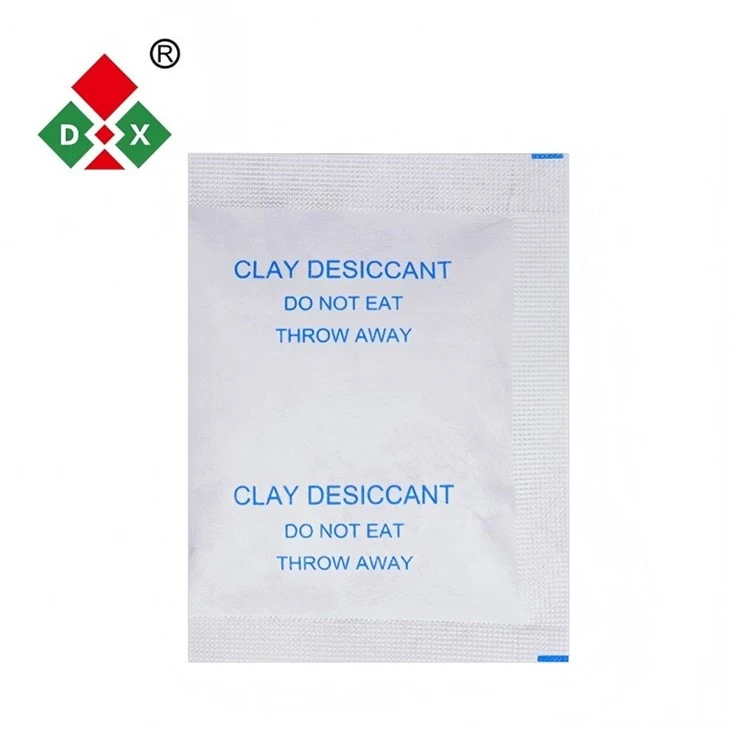
Our Clay Desiccants Packets are designed to withstand the rigors of handling and transportation. They have been tested under various conditions to ensure that they can maintain their integrity and performance in real - world applications.
Conclusion
In conclusion, the mechanical strength of bentonite clay desiccant is a multi - faceted property that includes compressive strength, abrasion resistance, and impact resistance. These properties are crucial for the desiccant's performance in different industries, from food and electronics to pharmaceuticals.
As a reliable supplier of Bentonite Clay Desiccant, we are committed to providing products with excellent mechanical strength. Our continuous efforts in research and development ensure that our desiccants meet the highest standards of quality and performance.
If you are in need of high - quality bentonite clay desiccant, we invite you to contact us for procurement and further discussions. We are ready to provide you with detailed product information and customized solutions to meet your specific requirements.

References
- "Desiccants and Moisture Control in Packaging" - A comprehensive book on desiccants that provides in - depth knowledge about the properties and applications of different desiccants, including bentonite clay desiccant.
- Research papers on the mechanical properties of clay materials published in scientific journals such as "Journal of Materials Science" and "Clay Minerals". These papers offer insights into the factors affecting the mechanical strength of clay - based products.


