


Hey there! As a supplier of Clay Desiccant Bags, I often get asked about the absorption rate of these nifty little things. So, I thought I'd take a deep dive into the topic and share some insights with you all.
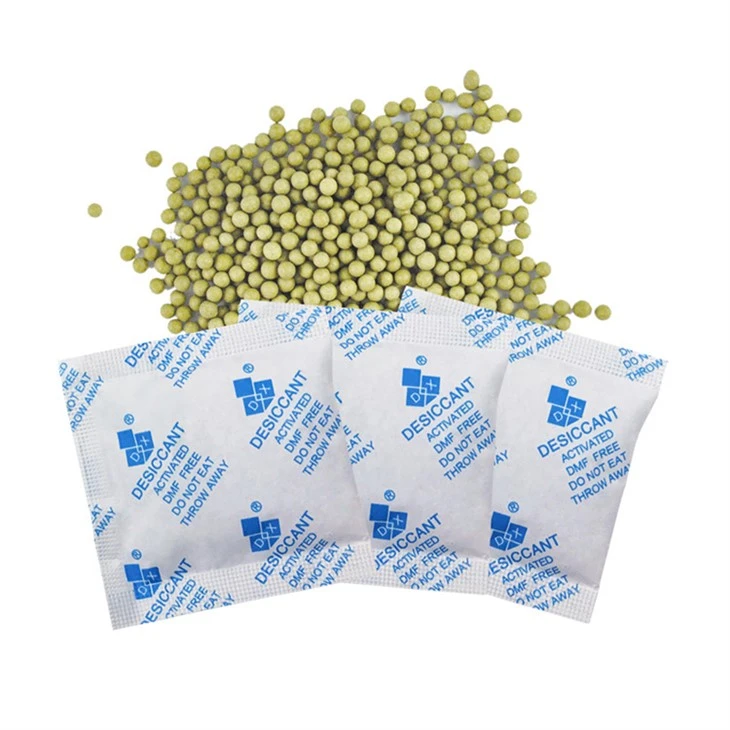
First off, let's talk about what a clay desiccant bag is. It's basically a small pouch filled with clay that's designed to absorb moisture from the surrounding environment. The clay used in these desiccants is usually bentonite, which is a type of clay that has excellent absorbent properties.
The absorption rate of a clay desiccant bag depends on several factors. One of the most important factors is the relative humidity (RH) of the environment. The higher the RH, the more moisture there is in the air, and the faster the desiccant will absorb it. For example, at a RH of 90%, a clay desiccant bag can absorb a significant amount of moisture within a few hours. On the other hand, at a RH of 30%, the absorption rate will be much slower.
Another factor that affects the absorption rate is the temperature. Generally, higher temperatures can increase the rate of moisture absorption. This is because warm air can hold more moisture than cold air, and the desiccant is more effective at attracting and holding that moisture. However, extremely high temperatures can also have a negative impact on the desiccant's performance over time.
The size and quality of the clay desiccant bag also play a role. A larger bag with more clay will typically have a higher absorption capacity. And when it comes to quality, well - the better the quality of the clay and the manufacturing process, the more efficient the desiccant will be.
Let's take a closer look at how we measure the absorption rate. Usually, it's measured in terms of the percentage of moisture the desiccant can absorb relative to its own weight. For a good quality clay desiccant bag, under normal conditions (around 25°C and 60% RH), it can absorb anywhere from 15% to 25% of its weight in moisture. That's pretty impressive when you think about it!
Now, you might be wondering where these clay desiccant bags are used. There are tons of applications! You can check out Clay Desiccant Uses for more detailed information. They're commonly used in shipping containers to prevent rust and mold on goods during transit. In warehouses, they help keep products dry and in good condition. You'll also find them in electronic devices to protect sensitive components from moisture damage.
If you're in the market for high - quality clay desiccant bags, we've got a couple of great options. Our Bentonite Activated Clay Desiccant is made from premium bentonite clay that's been specially treated to enhance its absorption properties. And our Clay Kraft Desiccant Packs are not only effective but also come in a convenient kraft paper packaging.
When you're choosing a clay desiccant bag, it's important to consider your specific needs. If you're dealing with a high - humidity environment, you might want to go for a larger bag or a desiccant with a higher absorption rate. If you're using it for a small, enclosed space, a smaller bag could be sufficient.
It's also worth noting that once the clay desiccant bag has reached its maximum absorption capacity, it can be regenerated in some cases. You can do this by heating the desiccant at a specific temperature for a certain period of time. This drives out the moisture, and the desiccant can then be used again.
In conclusion, the absorption rate of a clay desiccant bag is influenced by factors like relative humidity, temperature, size, and quality. Understanding these factors can help you make an informed decision when it comes to choosing the right desiccant for your needs.

If you're interested in purchasing our clay desiccant bags, we'd love to have a chat with you. Whether you have questions about the absorption rate, the product features, or anything else, feel free to reach out. We're here to help you find the best solution for keeping your products dry and protected.
References:
- General knowledge on desiccant technology and applications.
- Industry research on clay desiccant performance.


