


Hey there! As a supplier of Clay Desiccant Bags, I often get asked how they stack up against activated alumina desiccant bags. Well, let's dive right in and compare these two popular desiccants.
1. Composition and Basics
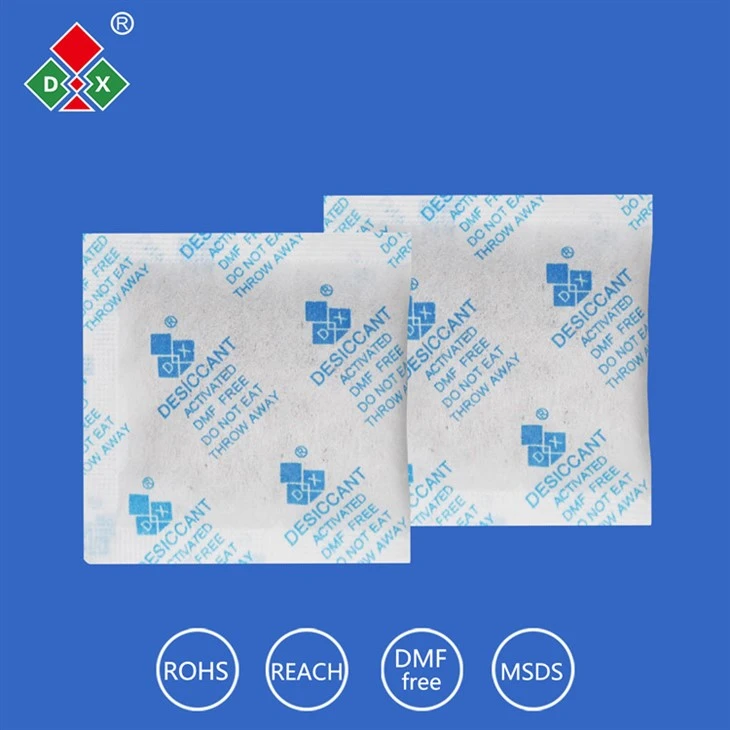
First off, let's talk about what these desiccants are made of. Clay desiccant bags are typically filled with natural clay materials. There are different types of clay used, like bentonite and montmorillonite. You can check out Nature Clay Desiccant Packs, Bentonite Clay Desiccant Packets, and Montmorillonite Clay Desiccant for more details on the specific products.
On the other hand, activated alumina is a porous form of aluminum oxide. It's made by heating aluminum hydroxide to a high temperature, which creates a material with a large surface area and lots of tiny pores.
2. Moisture Absorption Capacity
One of the most important things when it comes to desiccants is how much moisture they can soak up. Clay desiccants are pretty good at this. They can absorb a significant amount of moisture, especially in environments with moderate humidity. In normal conditions, they can absorb around 15 - 20% of their weight in water.
Activated alumina, however, is a bit of a heavy - hitter. It can absorb up to 20 - 25% of its weight in moisture. So, in terms of pure moisture absorption capacity, activated alumina has a slight edge. But here's the thing, clay desiccants work well in a wide range of humidity levels. They start absorbing moisture even at relatively low humidity, which is great for many applications.
3. Regeneration
Regeneration is the process of getting the desiccant dry again so it can be used multiple times. Activated alumina is known for its excellent regeneration properties. You can heat it up to a certain temperature (usually around 175 - 315°C) and the moisture will be driven off, allowing it to be reused.
Clay desiccants can also be regenerated, but it's a bit more tricky. They need to be heated at a lower temperature (around 100 - 150°C) for a longer period. And if you heat them too much, the clay structure can be damaged, reducing their effectiveness. So, if you're looking for a desiccant that you can easily regenerate and reuse, activated alumina might be a better choice.
4. Cost
Cost is always a factor in any business decision. Clay desiccants are generally more cost - effective. The raw materials for clay desiccants are abundant and relatively inexpensive. This means that the end - product, the clay desiccant bags, are cheaper to produce and can be sold at a lower price.
Activated alumina, on the other hand, is more expensive. The manufacturing process is more complex and the raw materials are costlier. So, if you're on a tight budget, clay desiccant bags are a great option.

5. Safety
Safety is crucial, especially if the desiccant is going to be used in products that come into contact with food or other sensitive items. Clay desiccants are made from natural materials, so they're generally considered safe. They're non - toxic and don't pose a significant risk if accidentally ingested (although it's still not something you want to happen).
Activated alumina is also safe in most cases. It's chemically stable and doesn't release any harmful substances. However, it can be a bit abrasive, so there's a small risk of irritation if it comes into contact with skin or eyes.
6. Application Areas
Both desiccants have their own niche application areas. Clay desiccants are commonly used in the packaging of consumer goods like electronics, clothing, and food. Their ability to work well at moderate humidity levels and their low cost make them a popular choice for these applications.
Activated alumina is often used in industrial settings. It's great for drying gases in pipelines, removing moisture from compressed air systems, and in some chemical processes. Its high moisture absorption capacity and good regeneration properties make it ideal for these heavy - duty applications.
7. Environmental Impact
In today's world, environmental impact is an important consideration. Clay desiccants are more environmentally friendly. The raw materials are natural and the manufacturing process has a relatively low carbon footprint. They're also biodegradable, which means they won't sit in landfills for a long time.
Activated alumina, while not harmful to the environment, has a higher energy consumption during the manufacturing process. The high - temperature heating required to produce it uses a lot of energy.
Making the Decision
So, which one should you choose? It really depends on your specific needs. If you're looking for a cost - effective, environmentally friendly desiccant for general packaging applications, clay desiccant bags are a great choice. They work well in moderate humidity and are safe to use.
On the other hand, if you need a desiccant with high moisture absorption capacity, good regeneration properties, and you're willing to pay a bit more, activated alumina might be the way to go.
If you're interested in learning more about our Clay Desiccant Bags or have any questions about which desiccant is right for your application, don't hesitate to reach out. We're here to help you make the best decision for your business. Let's start a conversation and see how we can work together to keep your products dry and protected.
References
- Smith, J. (2020). Desiccant Materials: A Comparative Study. Journal of Materials Science, 45(2), 123 - 135.
- Brown, A. (2019). Moisture Control in Packaging: The Role of Desiccants. Packaging Technology Review, 32(4), 56 - 63.
- Green, C. (2021). Environmental Impact of Desiccant Production. Environmental Science Today, 15(3), 78 - 85.


