


At a glance: silica gel desiccant sizing
Define the protected enclosure, humidity target, initial moisture, barrier transmission, and service time. Divide the design moisture burden by useful capacity at relevant conditions, then validate the complete packed assembly. Carton volume and maximum absorption percentage alone are insufficient.
A sachet placed inside a carton can create the appearance of moisture protection without providing a controlled environment. Moisture may continue entering through the package, while paper, foam, and the product itself release water already trapped inside. Package volume alone does not capture that load.
Silica gel desiccant sizing should connect the total moisture burden to a defined humidity target and service period. This guide explains the inputs buyers need and how to validate an export packaging design without relying on one universal grams-per-carton rule.
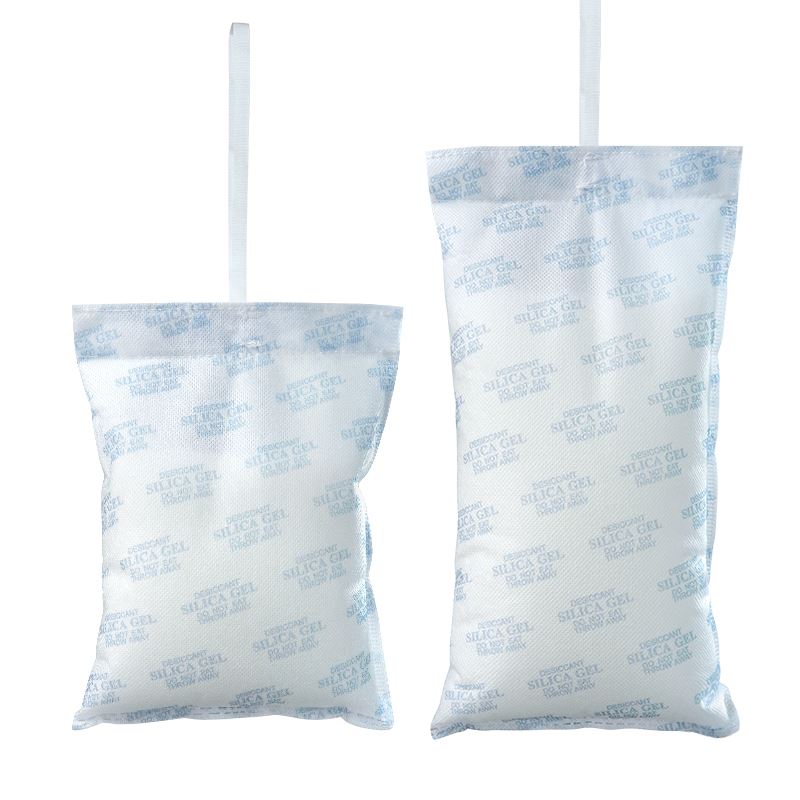
Product reference: desiccant-pack.com
What the desiccant must control
Silica gel adsorbs water vapor onto its internal surface. Its useful capacity depends on temperature, relative humidity, initial condition, and the required end point. A capacity measured at high humidity does not automatically apply to a low-humidity protection target.
The package creates the boundary of the system. A sealed barrier bag and an open corrugated carton allow very different rates of moisture entry. Desiccant cannot maintain a low internal humidity indefinitely when the package continually exchanges moist air.
For silica gel desiccant sizing, define the protected enclosure first. Include the product, cushioning, labels, and any moisture-bearing materials inside that enclosure rather than treating the air space as the only source.
Key factors in silica gel desiccant sizing
Set the humidity target and protection period
Identify the product's sensitivity and the maximum acceptable internal humidity under the expected conditions. Specify the service period from packing through transit and storage. A shipping duration alone may omit months of destination warehousing.
Temperature changes also matter because they affect moisture behavior and adsorption. Use a realistic exposure profile where possible. Silica gel desiccant sizing for a dry inland warehouse may differ from sizing for a humid route with repeated temperature cycles.
Estimate the initial moisture load
Consider water vapor in the enclosed air and moisture released by the product and packaging materials. Wood, paper, textiles, and foam can contribute more than the air itself. Incoming moisture should therefore be controlled through material conditioning where practical.
For illustration, a package may have a small air-space load but a much larger load from damp inserts. Adding sachets without addressing those inserts can make the system inefficient. Measure or conservatively estimate the relevant sources before selecting a dose.
Evaluate moisture entering through the barrier
Request water-vapor transmission information for the packaging material at stated conditions. Package area and protection time influence cumulative entry. Seals, folds, punctures, and closures can dominate actual performance even when the film has a low laboratory transmission rate.
A silica gel desiccant sizing worksheet should identify barrier area, test conditions, seam method, and expected handling. Do not transfer a film-only result directly to a finished package without considering seal integrity.
Use capacity at the relevant conditions
Ask for adsorption data tied to the intended humidity and temperature. Use the useful capacity before the internal humidity exceeds the target, not only a maximum absorption claim. Confirm the supplied material's initial moisture condition.
The conceptual calculation is required desiccant mass equals design moisture load divided by useful water capacity per unit mass. If an illustrative load is 12 grams and validated useful capacity is 0.15 gram per gram, the baseline is 80 grams. Those inputs are examples, not a universal product rating.
Validate the complete package
Add justified allowance for uncertainty, then test the actual packed assembly under representative exposure. Monitor internal humidity and inspect the product. A calculation is a starting point; the complete packaging system must demonstrate the intended protection.
For silica gel desiccant sizing, also evaluate sachet strength, dusting, placement, and accidental contact. Keep the sachet away from locations where it can be trapped in a seal or damaged by sharp components. The packaging line must preserve the validated arrangement.
Common problems and mistakes
Sizing by carton volume alone. This omits moisture from the contents and future transmission. Volume can be an input, but it is not a complete model.
Using a high-humidity capacity claim for a low-humidity target. Useful capacity changes with conditions. Request data appropriate to the actual protection requirement.
Leaving desiccant exposed before packing. Material can take up moisture before it reaches the sealed package. Control handling time and store unused material according to the supplier's instructions.
Assuming the largest sachet solves every route. An inadequate barrier or leaking seal can defeat the design. Silica gel desiccant sizing should improve the package system rather than hide its weaknesses.
Sealed barrier package vs. ordinary carton
| Item | Sealed barrier enclosure | Ordinary carton alone |
|---|---|---|
| Moisture boundary | Defined material and seals | High exchange with surrounding air |
| Useful sizing inputs | Area, transmission, internal load, time | Highly variable ambient exposure |
| Validation | Internal humidity over the target period | Limited control without another barrier |
| Main design focus | Barrier integrity and dose | Establish a suitable protected enclosure |
The 5 gram silica gel packets page provides a small-sachet reference, while 1 kg silica gel bags may suit different industrial arrangements. Package size should follow the validated design rather than determine the moisture target.
Application scenarios
For electronics, confirm whether the parts require a formal moisture-sensitive-device packaging procedure. A generic desiccant dose should not replace the applicable component handling instructions. Include the specified barrier, humidity indicator, and exposure controls where required.
For metal components, evaluate surface condition, corrosion sensitivity, and any complementary protection. Silica gel desiccant sizing should account for wet packaging materials and the intended storage period. A dry sample packed in a laboratory may not represent a production load.
For food-contact applications, verify the sachet material, labeling, and applicable documentation for the actual use. Desiccant controls moisture but does not establish food safety or shelf life by itself. The finished package requires product-specific validation.
At the packing line, verify sachet identity and the time allowed between opening bulk packaging and sealing the protected enclosure. Record how unused material is resealed. A calculated capacity assumes a defined initial condition; uncontrolled pre-exposure can consume that capacity before the shipment begins and make a correct calculation appear ineffective.
Frequently Asked Questions
How many grams should I put in one carton?
There is no reliable universal answer. Define the protected enclosure, moisture sources, barrier performance, humidity target, and service period before calculating the dose.
Does a bigger sachet always last longer?
More suitable desiccant can provide more capacity, but exposure and barrier leakage still govern performance. A poorly sealed package may overwhelm any practical dose.
Can I use the supplier's maximum absorption percentage?
Only if its conditions match the intended design end point. Maximum capacity at high humidity may overstate useful capacity for low-humidity protection.
Should I include the moisture in paper inserts?
Yes. Paper, wood, textiles, and other materials can release significant moisture inside a sealed enclosure. Control their condition or include the load in the model.
Can silica gel be reused?
Only where the product and supplier instructions allow a validated regeneration process. Do not assume that a filled sachet, indicator, or application remains suitable after heating.
How do I prove the package works?
Test representative complete packages over the relevant exposure period, monitoring humidity and product condition. Keep the packing method, materials, and acceptance criteria controlled.
Conclusion
Silica gel desiccant sizing depends on moisture load, barrier quality, useful capacity, and protection time. Calculate a defensible starting dose and verify it in the complete package. Review the 5 gram silica gel packets specifications when selecting a sachet format after the required total capacity has been established.


